Sarandë Before the Crowds: Albania's Coastal Gem Is Having Its Moment — And Smart Travelers Are Already Booking
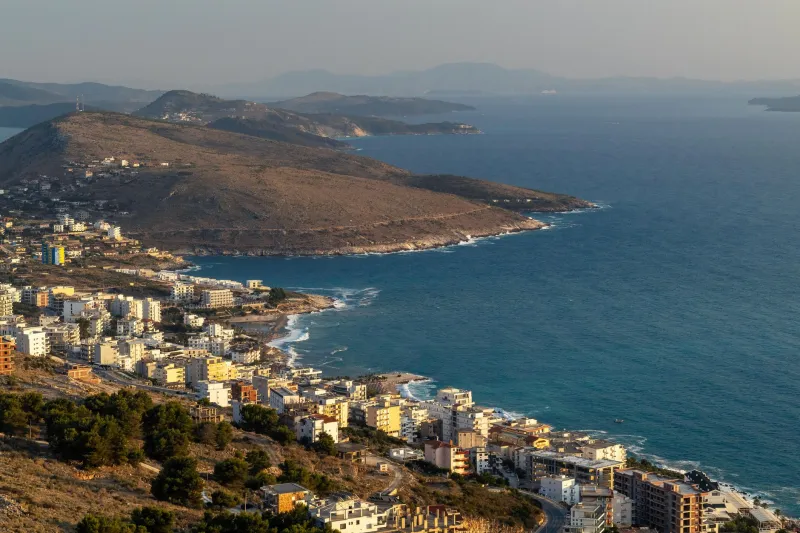
There's a particular kind of travel bragging that happens over dinner parties and group chats — the "I went there before it blew up" story. Santorini before the Instagram era. Lisbon before the boutique hotel boom. Medellín before the Netflix documentaries. If you're the type who likes to stay ahead of the curve, pull up a chair, because Sarandë is about to become your new favorite conversation starter.
Nestled at the southern tip of Albania's Ionian coastline, Sarandë (pronounced roughly like "sah-RAN-deh") sits in a natural horseshoe bay with water so clear you can count the rocks on the bottom from a paddleboard. Corfu — yes, the Greek island you've probably already Googled — floats tantalizingly on the horizon, close enough that a 35-minute ferry ride separates the two. That proximity alone makes Sarandë something genuinely rare: a budget-friendly base camp with a luxury Greek island day trip baked right into the itinerary.
But calling Sarandë a budget destination almost undersells what's happening here. This isn't a place you visit because it's cheap. Increasingly, it's a place you visit because it's good.
From Gritty Port to Waterfront Scene
Ten years ago, Sarandë's reputation was, to put it charitably, a work in progress. The post-communist hangover that shaped much of Albania through the 1990s and early 2000s left visible marks — crumbling infrastructure, haphazard development, a waterfront promenade that felt more functional than beautiful. Most tourists who showed up were backpackers cutting through on their way to Greece.
Fast-forward to now, and the transformation is genuinely striking. The bulevar — the main seafront boulevard — has been overhauled into a sweeping promenade lined with palm trees, outdoor cafés, and restaurants that would look right at home in coastal Italy. Family-owned hotels with rooftop pools and sea-view terraces have replaced a lot of the tired Soviet-era accommodation. A new generation of Albanian entrepreneurs, many of them educated abroad, has come home and opened the kind of places that generate word-of-mouth: cocktail bars with DJ sets on summer evenings, seafood spots where the catch came in that morning, boutique guesthouses where the owner personally recommends your day trips over breakfast.
It's not a polished, Disneyfied version of itself. And that's exactly the point. Sarandë still has rough edges — a stray cat population that's genuinely impressive, construction cranes that appear at inopportune moments in your photos, streets that don't always make geographic sense. But that authenticity is precisely what gives it an energy that over-touristed Mediterranean resorts have long since lost.
The Beaches (Yes, They're That Good)
Let's talk about the water, because it's the kind of thing that makes people tear up a little when they describe it. The Albanian Riviera south of Sarandë — stretching down through Ksamil, Borsh, and beyond — offers some of the clearest, most unspoiled swimming spots in the entire Mediterranean basin. Not "pretty good for Europe" clear. Maldives-level clear, with a blue-green palette that photographers genuinely struggle to capture accurately because it looks too saturated to be real.
Ksamil, just a 20-minute drive from Sarandë, deserves its own paragraph. A cluster of small islands sits just offshore, accessible by paddleboat or a short swim, surrounded by shallow turquoise water and white pebble beaches. In July and August, it gets busy — European tourists have been clued in for a few years now — but show up in late May, June, or September and you'll share those beaches with a fraction of the crowd you'd encounter at any comparable spot in Croatia or Greece.
Back in Sarandë proper, the town beach is a long, sweeping stretch that's ideal for a casual morning swim before coffee. It's not the most dramatic beach on the Riviera, but it's convenient, clean, and almost absurdly scenic with Corfu's mountains visible across the water.
Day Trips That Would Cost You a Fortune Elsewhere
One of Sarandë's underappreciated advantages is its position as a logistical hub for some seriously impressive day-trip options. The ferry to Corfu runs multiple times daily and costs somewhere in the range of $20-30 each way — meaning you can spend a morning wandering the UNESCO-listed Old Town of Corfu, eat lunch in a taverna overlooking the Ionian Sea, and be back in Sarandë in time for sunset cocktails on your hotel terrace. That's a day that would require significantly more planning and expense from almost any other base.
Closer to home, the ancient ruins of Butrint — a UNESCO World Heritage Site and one of Albania's most impressive archaeological destinations — sit just 18 kilometers south of Sarandë. The site spans Greek, Roman, Byzantine, and Venetian layers of history, all set within a lush national park where you're likely to see herons and turtles alongside the crumbling temples. Most visitors spend two to three hours here and still feel like they've only scratched the surface.
For the hikers and adventure-seekers, the road north along the Riviera leads to the Blue Eye (Syri i Kaltër), a natural spring so impossibly blue it looks like someone photoshopped a swimming pool into the Albanian wilderness. The spring feeds a river that runs crystal clear through a forested canyon — it's a 30-minute drive from Sarandë and costs essentially nothing to visit.
What to Eat, Drink, and Spend
Albanian food in Sarandë leans heavily on the sea, which makes sense given the geography. Fresh grilled fish, calamari, mussels, and the occasional whole sea bream are staples at the waterfront restaurants. Pair any of it with a glass of local raki (Albania's beloved grape brandy, which is offered with suspicious frequency at any hour of the day) or a bottle of Çobo winery's white — an Albanian label that's quietly excellent and costs almost nothing by the glass.
Budget-wise, Sarandë remains dramatically more affordable than comparable Mediterranean destinations. A solid dinner for two with drinks at a mid-range waterfront restaurant will run you somewhere between $25-45 — roughly what you'd pay for appetizers alone in Positano. Boutique hotel rooms with sea views start around $70-100 per night in peak season, and drop considerably in the shoulder months. The math is almost offensively favorable compared to Greek or Italian alternatives.
When to Go — And Why Sooner Is Better
May, June, and September are the sweet spots. The water is warm enough to swim comfortably, the crowds are manageable, accommodation prices are lower, and the town has an unhurried quality that disappears in the peak of summer. July and August are vibrant but significantly busier, with European beach tourists filling the promenade and prices ticking up accordingly.
Here's the thing about Sarandë that's worth sitting with: the window for visiting it in its current form — lively but not overrun, developing but not over-developed, genuinely warm and welcoming to American visitors who are still something of a novelty — is probably finite. The infrastructure is improving. The flights are getting easier (Tirana's international airport is about three hours by car, and there's a seasonal airport in Sarandë itself). The word is spreading.
The travelers who show up in the next year or two will be the ones who get to say they were there before the boutique travel magazines ran their cover stories. Before the hotel chains moved in. Before the reservation wait times got ridiculous.
Sarandë is ready for you. The only question is whether you're ready to go.