Ancient Stones, Zero Selfie Sticks: Albania's Roman Ruins Are the Archaeology World's Hottest Secret
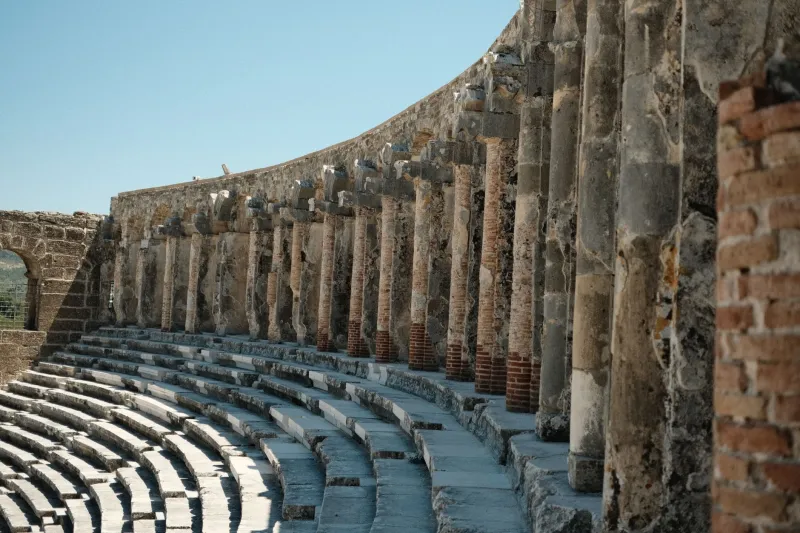
Imagine wandering through a Roman theater so well-preserved you can almost hear the echo of a long-dead crowd — and doing it completely alone. No tour buses idling in the parking lot. No audio guide robots bumping into your ankles. Just you, a crumbling amphitheater, and about 2,500 years of history pressing in from every direction.
That's not a fantasy. That's a Tuesday afternoon at Apollonia, Albania.
While the rest of the ancient world gets loved to death by mass tourism, Albania's archaeological sites are sitting largely undisturbed, quietly dazzling the handful of archaeologists, academics, and curious travelers who've figured out what's going on here. Spoiler: a lot is going on here. And American history buffs are just starting to catch on.
Why Albania Keeps Getting Overlooked (And Why That's About to Change)
Let's be honest — for most Americans, Albania barely registers on the mental map of European travel. The country spent decades sealed off under one of the most isolationist communist regimes in history, and that invisibility has a long tail. Even today, it doesn't show up on the average traveler's radar the way Italy, Greece, or Croatia do.
But that obscurity is precisely what makes it so extraordinary for anyone with even a passing interest in ancient civilizations. Albania sits at a crossroads that virtually every major Mediterranean power passed through — Greeks, Romans, Byzantines, and Ottomans all left their mark here. The result is a layered archaeological record that scholars describe as genuinely staggering in scope.
Dr. Lorenc Bejko, one of Albania's leading archaeologists, has described the country as "an open-air museum that hasn't been fully opened yet." That's not marketing copy. That's an archaeologist trying to convey the sheer density of what's still being uncovered.
Butrint: The UNESCO Site That Rivals Pompeii
If you're building an Albanian archaeology itinerary, Butrint is your anchor. Located in the far south of the country near the Greek border, this UNESCO World Heritage Site has been continuously inhabited since at least the 7th century BC. That's not a typo. Seven centuries before Christ.
What makes Butrint genuinely mind-bending is the layering. You're not looking at one civilization's leftovers — you're looking at a geological cross-section of Western history. Greek colonists built here. Romans expanded it into a proper city. Early Christians constructed a baptistery whose floor mosaics still survive in remarkable condition. The Byzantines reinforced the walls. The Venetians added their own architectural stamp.
For American visitors used to history measured in hundreds of years rather than thousands, standing inside Butrint's ancient theater — which dates to the 3rd century BC — produces a particular kind of vertigo. The site sits within a nature reserve, surrounded by lagoons and dense forest, which gives the whole place an almost cinematic atmosphere. Think Angkor Wat, but in southern Europe, and without the crowds.
Visitor numbers here are a fraction of what comparable sites in Italy or Greece attract. On a weekday, you might share the grounds with a handful of other people. That kind of access is increasingly rare in the world of ancient history tourism.
Apollonia: Where Alexander the Great's Father Sent Him to Study
About two hours north of Butrint, near the modern city of Fier, lie the ruins of Apollonia — a Greek colonial city founded in the 7th century BC that eventually became one of the most important urban centers in the entire Illyrian region.
Here's a name that might grab your attention: Julius Caesar. He considered Apollonia strategically vital during his civil war campaigns and stationed troops there. More dramatically, a young Octavian — the future Emperor Augustus — was studying in Apollonia when he received word that Caesar had been assassinated. He immediately sailed for Rome to claim his inheritance and, eventually, the empire itself.
The site today includes a remarkably intact odeon (a small covered theater), a nymphaeum, and a monastery that was built directly into the ancient ruins — a visual reminder that history in this part of the world doesn't sit in neat, separated chapters. The on-site museum houses artifacts that would command serious attention in any major American institution.
And yet, Apollonia receives a tiny fraction of the visitors that Ephesus or Pompeii attract annually. The parking lot is rarely full. The admission fee is minimal. There's a good chance you'll have sections of the ruins entirely to yourself.
Getting Your Hands Dirty: Volunteer Dig Opportunities
For Americans who want more than just photographs, Albania is increasingly becoming a destination for archaeological voluntourism. Several ongoing excavations — including work at sites like Antigonea near Gjirokastër and various Illyrian-era sites in the interior — have begun accepting international volunteers through partnerships with universities and NGOs.
Organizations like the Albanian Institute of Archaeology and various European university programs run field seasons that welcome motivated participants with no professional background required. You'll work alongside trained archaeologists, learn excavation techniques, and contribute to research that genuinely matters — all while living in a country where your dollar stretches remarkably far.
This kind of immersive experience is the sort of thing that used to require connections to an academic institution or a very specific professional background. Albania's relative openness to international collaboration is changing that equation, and word is spreading fast through the American archaeology enthusiast community.
Gjirokastër and Byllis: The Sites You've Never Heard Of (But Should)
Beyond Butrint and Apollonia, Albania's archaeological map has depth that most visitors never get to. The ancient city of Byllis, perched on a plateau above the Vjosa River valley, features a stadium, a bishop's basilica, and city walls that stretch for nearly three miles. Excavations there have been ongoing for decades and are still turning up significant finds.
Gjirokastër, already famous for its Ottoman-era old town (another UNESCO site), sits near several Illyrian and Roman-era sites that receive almost no international attention. The region essentially functions as an archaeological corridor with layers of civilization stacked on top of each other — and most of it is accessible to independent travelers willing to rent a car and do a little research.
Practical Stuff: How to Actually Do This Trip
Albania is easier to navigate than most Americans expect. No visa is required for US passport holders. English is widely spoken among younger Albanians, particularly in tourist areas. The road infrastructure has improved significantly over the past decade, and rental cars are affordable.
For an archaeology-focused itinerary, a solid base strategy is to split your time between Sarandë (for Butrint access) and either Berat or Fier (for Apollonia and the surrounding region). Both areas have grown their accommodation options considerably, with everything from boutique guesthouses to comfortable mid-range hotels available at prices that'll make you do a double-take compared to what you'd pay in Greece.
Albania's peak tourist season runs June through August, but for archaeological visits, shoulder season — April through June or September through October — is genuinely ideal. The light is softer, the heat is manageable, and the sites are even quieter than usual.
The Bottom Line
The ancient world is full of spectacular places that have been turned into theme parks of themselves — expertly managed, thoroughly documented, and absolutely mobbed. Albania offers something increasingly rare: ancient history that still feels like a discovery.
For American travelers who've done Rome and Athens and want to go somewhere that genuinely surprises them, or for history enthusiasts who want to engage with archaeology rather than just observe it, Albania right now represents a window that won't stay open forever. The international scholarly community has already figured this out. The tour buses are, for the moment, still pointing elsewhere.
That's your opportunity. Take it.