Sip, Swirl, and Save: Albania's Booming Wine Scene Is Europe's Most Exciting Secret
Picture this: you're sitting on a stone terrace, a glass of deep ruby red in hand, looking out over sun-drenched hills that haven't changed much since antiquity. There's no tour guide herding you toward the gift shop. The winemaker — a third-generation grape grower who spent a decade studying viticulture in France — is sitting across from you, pouring a second glass and explaining why Albanian soil produces something the rest of Europe still hasn't figured out how to replicate.
This isn't a fantasy. It's a Tuesday afternoon in Berat, and it's more accessible than you'd ever imagine.
Albania's wine renaissance is real, it's happening right now, and American travelers who get there first are going to have one heck of a story to tell.
An Ancient Tradition, Interrupted
Albania's relationship with wine goes back thousands of years. Archaeological evidence suggests winemaking in the region dates to at least the 4th century BC, when Illyrian tribes cultivated indigenous grape varieties across the hillsides of what is now central and southern Albania. The Greeks and Romans who passed through were enthusiastic fans — Albanian wine was traded across the Adriatic long before anyone had heard of Chianti.
Then came the 20th century, and with it, communist rule under Enver Hoxha. The regime collectivized agriculture, dismantled private vineyards, and replaced artisan winemaking with industrial production focused on quantity rather than quality. By the time the Iron Curtain fell in the early 1990s, decades of winemaking knowledge had been buried — literally and figuratively.
What's happened since is nothing short of remarkable.
The Comeback Kids of Albanian Wine
Over the past 15 years, a new generation of Albanian winemakers has been digging back into that buried heritage — researching pre-communist varieties, consulting with European viticulture experts, and investing in modern production techniques without abandoning the ancient soul of Albanian winemaking.
The results are genuinely impressive.
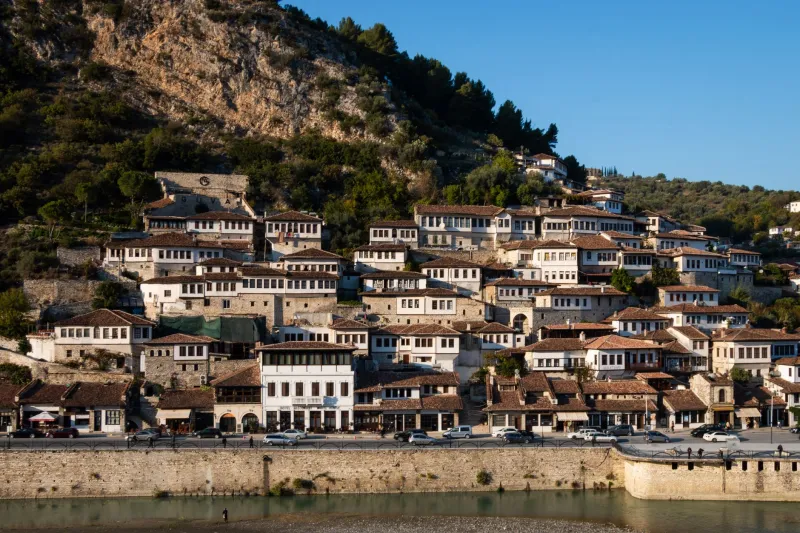
Vineyards around Berat — the UNESCO-listed "City of a Thousand Windows" — are producing wines from native grapes like Shesh i Zi (a bold, tannic red) and Shesh i Bardhë (a crisp, aromatic white) that sommeliers in Tirana and beyond are getting genuinely excited about. These aren't novelty bottles you drink once for the experience. They're wines with real structure, complexity, and a sense of place that the industry calls terroir — and that Albanian soil has in abundance.
Further south, the hills around Vlorë and the Vjosë River valley are emerging as another hotspot, with smaller boutique operations experimenting with both native and international varieties. The climate here — long, dry summers and mild winters — is practically custom-built for viticulture.
And the prices? A high-quality bottle from one of Albania's top producers will typically run you $10–$20 USD in-country. A tasting session at a family-run winery might cost you nothing more than the price of the bottle you choose to take home.
Where to Go: Albania's Wine Trail in Practice
You don't need to book a curated tour (though that's an option worth considering if you want someone else to handle logistics). Albania's wine country is compact enough to explore independently, and the hospitality you'll encounter along the way is genuinely one of the best parts.
Berat and the Skrapar Region
Start here. Berat is already one of Albania's most compelling destinations on its own merits — the castle, the whitewashed Ottoman houses, the cobblestone lanes — but it's also the unofficial capital of Albanian wine country. Several wineries operate within easy driving distance of the city center, and a few have proper tasting rooms where you can settle in for an afternoon. Ask your accommodation for recommendations; locals take real pride in directing visitors to the best producers, and you'll often end up somewhere that doesn't appear in any guidebook.
The Korçë Plateau
Head east toward Korçë, and the landscape shifts into something that feels almost Central European — cooler temperatures, rolling plains, and a winemaking tradition that predates the Ottoman period. The region is less visited than Berat, which means you're even more likely to have a winery to yourself. Korçë is also famous for its beer (the local brewery is an institution), but the wine scene here deserves equal attention.
Vlorë and the Southern Riviera
If you're already planning a trip down the Albanian Riviera — and you should be — factor in a detour inland from Vlorë. The drive alone is worth it: terraced hillsides, olive groves, and the occasional crumbling Ottoman watchtower punctuating the skyline. Boutique producers in this area tend to be smaller and less set up for formal tastings, so a little flexibility goes a long way. Show up, introduce yourself, and see what happens. More often than not, what happens is excellent.
What to Drink: A Quick Primer
If you're new to Albanian wine, here's a cheat sheet for navigating the menu:
- Shesh i Zi: The flagship red. Dark fruit, firm tannins, and earthy undertones. Pair it with roasted lamb or aged cheese.
- Shesh i Bardhë: The go-to white. Floral, slightly citrusy, and refreshingly light. Perfect with grilled fish along the coast.
- Kallmet: A red variety from northern Albania with a softer profile — great for those who find Shesh i Zi a bit intense.
- Debinë e Zezë: A rare native variety being revived by a handful of ambitious producers. If you see it on a list, order it. You probably won't find it anywhere else.
Most Albanian wineries also produce a local raki — a grape-based brandy that functions as both aperitif and after-dinner digestif. It's strong, it's good, and refusing a glass is considered mildly impolite. Consider yourself warned.
The Bigger Picture: Why This Matters
Albanian wine isn't just a fun discovery for adventurous travelers. It's a story about resilience — about a culture that had something precious taken from it and is methodically, passionately taking it back. Every bottle you buy from a family vineyard in Berat or a boutique operation outside Vlorë is a direct investment in that process.
And honestly? It's also just really good wine.
The European wine world has been quietly paying attention for a few years now. Albanian producers are starting to win international awards. Sommeliers in London and Berlin are adding Albanian labels to their lists. The window to discover this scene before it becomes a thing — before the wine tourism infrastructure catches up and the prices follow — is open right now, but it won't stay open forever.
So book the flight, rent the car, and leave a little room in your suitcase. You're going to want to bring some bottles home.