Albania's Secret Islands: Sun-Soaked, Crowd-Free, and Cheaper Than You'd Ever Expect
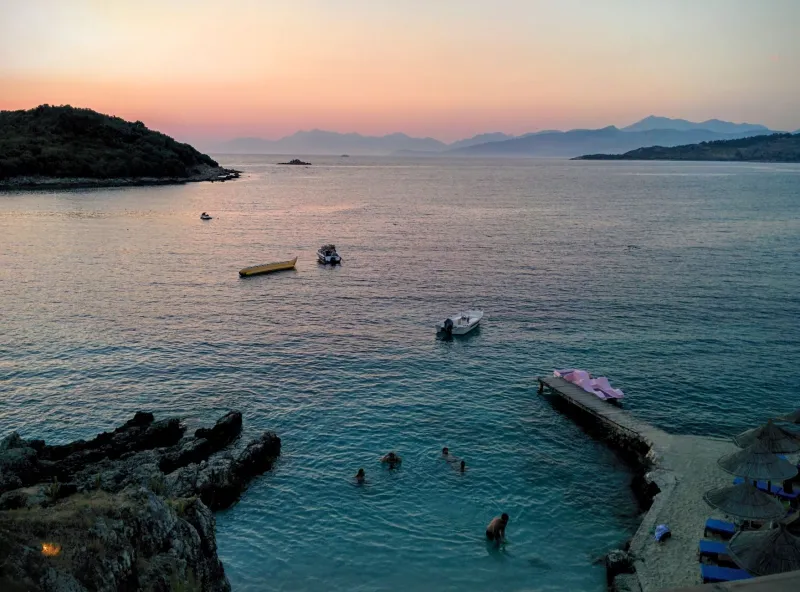
Let's be honest: when most Americans picture Mediterranean island-hopping, they're imagining whitewashed walls, Instagram queues, and credit card bills that sting for months. Greece and Croatia have been selling that dream — and charging accordingly — for decades. But tucked along Albania's southern coastline is a cluster of islands and peninsulas that deliver the same turquoise water, the same dramatic limestone cliffs, and the same golden-hour magic at a fraction of the cost. We're talking Sazan Island, the Karaburun Peninsula, and the little satellite islands scattered around Ksamil. Most American travelers have never heard of any of them. That's exactly why you should go.
Sazan Island: Albania's Forbidden Frontier, Now Open for Business
For most of the 20th century, Sazan was completely off-limits. During the Enver Hoxha era — Albania's long stretch of isolationist communist rule — the island served as a heavily fortified military base, and even after communism collapsed in the early 1990s, it stayed closed to civilians for years. That history alone makes it one of the more fascinating spots in the entire Adriatic.
Today, Sazan is accessible via guided boat tours departing from Vlorë, Albania's second-largest coastal city. The island sits at the mouth of the Bay of Vlorë, roughly 5 miles offshore, and the boat ride itself is half the adventure — you'll pass through some of the clearest water in the Mediterranean, with visibility that'll make you want to jump overboard immediately (and yes, you can).
Once you arrive, expect dense Mediterranean scrubland, crumbling Cold War-era military infrastructure, and beaches that see maybe a few dozen visitors on a busy day. There are no hotels, no beach bars, no vendors hawking overpriced cocktails. Bring your own food, sunscreen, and a sense of adventure. Most tours run as full-day excursions and combine Sazan with a stop at the Karaburun Peninsula, which sits right next door.
Practical logistics: Tours from Vlorë typically run between $25–$50 USD per person depending on the operator and group size. Private boat rentals are also available if you want more flexibility — expect to pay around $150–$250 for a half-day charter. Book through your accommodation in Vlorë or directly at the harbor. The season runs roughly May through September, with July and August being the busiest (though "busy" here is relative — you're still talking about a few boats, not a fleet).
Karaburun Peninsula: The Wild Side of the Albanian Riviera
Attached to the mainland but functionally island-like in its isolation, the Karaburun Peninsula is a protected national park and one of the most ecologically significant stretches of coastline in the entire Balkans. It's home to rare bird species, monk seals (yes, actual Mediterranean monk seals), and a series of sea caves that rival anything you'd find in Croatia or the Amalfi Coast — minus the tour boat traffic jams.
The most famous of these caves, the Haxhi Ali Cave, is accessible only by sea. You'll float your boat directly into a massive cavern where the light filters through the water in shades of green and blue that genuinely don't look real. It's the kind of place that makes you feel like you accidentally stumbled into a screensaver.
Because Karaburun is a protected area, development is intentionally limited. There are no resorts, no restaurants, and no crowds to speak of. Snorkeling and diving here are exceptional — underwater visibility regularly exceeds 100 feet, and the marine life is thriving precisely because this coastline hasn't been hammered by mass tourism. If you're a certified diver, several operators in Vlorë offer dive excursions specifically to the Karaburun waters.
Best time to visit: Late May through mid-June and September are the sweet spots. The water is warm enough for swimming, the summer crowds haven't fully materialized yet (or have already thinned out), and the light in the late afternoon is spectacular for photography.
Ksamil's Satellite Islands: The Maldives Comparison That Actually Holds Up
Down near Albania's southern border with Greece, the small resort town of Ksamil has become one of the country's most talked-about beach destinations — and for good reason. The water is that specific shade of turquoise that makes people question whether it's been digitally enhanced. It hasn't.
Just offshore from Ksamil's main beach sit four tiny islands — so small that "islands" might be generous; "glorified sandbars with personality" is arguably more accurate. Three of them are accessible to the public, and you can reach them by renting a small paddleboat or kayak from the beach for around $5–$10 an hour, or by hopping on one of the short water taxi rides that run constantly throughout the day in peak season.
The islands themselves are low-key — a bit of shade, some rocks to jump from, and water so clear you can see the bottom from 20 feet up. They're not dramatic in the way Sazan is, but they offer something increasingly rare in the Mediterranean: a genuinely relaxed, unrushed beach experience where you're not fighting for space or paying $30 for a sun lounger.
Ksamil also puts you within easy striking distance of Butrint, one of Albania's UNESCO World Heritage Sites — an ancient city that's been inhabited since the 7th century BC and is absurdly undervisited compared to similar sites in Greece or Italy. If you're combining beach days with a bit of history, Ksamil is an ideal base.
Getting to Ksamil: From Sarandë (the nearest major town, about 14 miles north), you can grab a furgon — Albania's informal shared minibus system — for less than $2. Taxis run around $10–$15. From Tirana, it's roughly a 4–5 hour drive or bus ride.
Planning Your Albanian Island Trip: What American Travelers Need to Know
First, the good news: Americans don't need a visa to enter Albania for stays up to a year (yes, really — check our earlier coverage on Albania's visa policy for the full breakdown). The country uses the Albanian lek, but euros are widely accepted in tourist areas, and ATMs are easy to find in Vlorë, Sarandë, and Ksamil.
Accommodation along this stretch of coast ranges from budget guesthouses around $30–$50 a night to boutique hotels in the $80–$120 range — numbers that would get you laughed at if you tried to book comparable properties in Santorini or Dubrovnik.
The Albanian Riviera is best accessed by flying into Tirana's Mother Teresa International Airport (the country's main hub with growing connections from major European cities) and then driving or busing south. Rental cars give you the most flexibility for exploring the coastline and reaching departure points for boat tours.
One practical note: infrastructure in some areas is still developing. Roads to certain coastal spots can be rough, boat tour schedules aren't always consistent, and English-language signage is limited outside of major towns. None of this is insurmountable — it's just the texture of traveling somewhere that hasn't been fully smoothed out for mass tourism yet. Honestly? That's part of the appeal.
The Bottom Line
Albania's islands won't give you the boutique hotel infinity pools or the curated nightlife of Greece's most famous destinations. What they will give you is something harder to find in the Mediterranean these days: actual solitude, genuinely wild landscapes, water that looks like it belongs in a nature documentary, and the quiet satisfaction of discovering somewhere before the crowds arrive. That window is still open — but it won't stay open forever.