Hilltop Fortresses, Zero Crowds: Albania's Ottoman Castles Are a Medieval Fantasy Come True
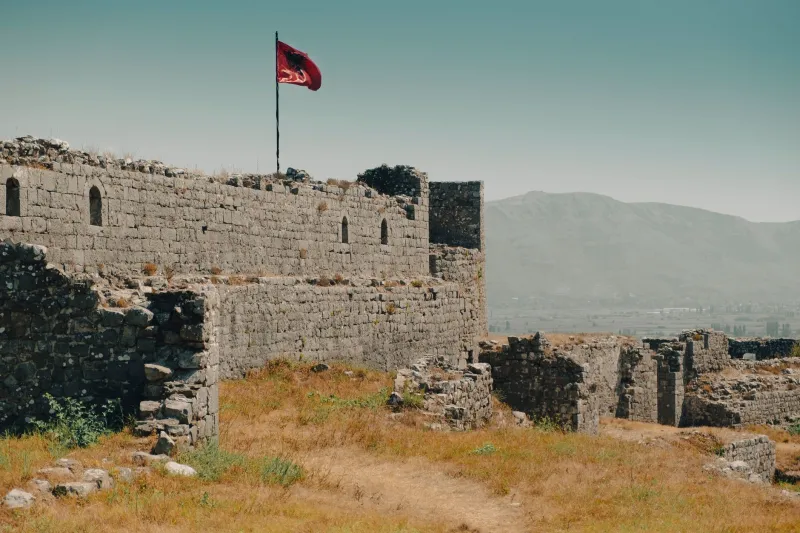
Let's be honest — most Americans planning a European castle trip are imagining the same postcard: a fairy-tale turret rising above a manicured lawn, surrounded by tour buses and a gift shop selling plastic swords. And sure, those places are impressive. But if you want to actually feel like you've stepped into another century — wind in your face, ancient stone under your boots, and not a single stranger photobombing your shot — Albania's hilltop fortresses are doing something those famous landmarks simply can't anymore.
Albania has more medieval and Ottoman-era castle ruins per square mile than almost any country in Europe, and the vast majority of them are still flying under the radar. That's not an exaggeration. It's a legitimate travel opportunity that history buffs, adventure seekers, and yes, devoted fantasy TV fans are only just starting to catch onto.
The Legend Behind Rozafa: Albania's Most Mythic Fortress
Perched on a rocky hill where three rivers converge near the northern city of Shkodër, Rozafa Castle is the kind of place that makes you stop mid-hike and just stare. The views alone — across the shimmering expanse of Lake Shkodër toward the Montenegrin mountains — are worth the climb. But it's the legend that really gets under your skin.
According to Albanian folklore, three brothers were building the castle walls when they kept collapsing overnight. A wise man told them the only way to make the walls hold was to entomb a living person within them. The brothers agreed that whichever of their wives brought lunch the following day would be the sacrifice. Two of the brothers secretly warned their wives to stay home. The third didn't — and his young wife, Rozafa, was sealed into the foundations. Before the walls closed around her, she made one request: that openings be left for her right breast, right hand, and right foot, so she could continue to nurse her infant son.
The castle still stands. And locals will tell you the reddish mineral deposits that sometimes seep from the walls are the milk of Rozafa.
That kind of story doesn't come with a guided audio tour. You find it by talking to people, by wandering the ruins at dusk, by asking questions. That's the Albania experience in a nutshell.
Petrela Castle: A Half-Day Trip That Feels Like a Film Set
Just 15 miles southeast of Tirana, Petrela Castle sits on a rocky outcrop above the Erzen River valley. It's one of the most accessible fortress experiences in the country — a quick drive from the capital — but it still manages to feel genuinely remote once you're up there.
The structure dates back to at least the 5th century, though it was heavily fortified during the era of Albania's national hero, Gjergj Kastrioti Skënderbeu (known in the West as Skanderbeg), in the 15th century. Petrela reportedly served as a base for his sister during his long resistance against the Ottoman Empire. Standing on its ramparts and looking out over the river valley below, it's not hard to imagine why. The defensive position is almost comically perfect.
The castle has been partially restored and is open to visitors, with a small café tucked inside the walls — possibly the most dramatic coffee stop in the Balkans. Combine it with a visit to Tirana and you've got a genuinely epic day without ever needing to book a tour.
Berat's Castle Quarter: A Fortress You Can Actually Sleep In
Berat is a UNESCO World Heritage city, and its castle — Kalaja — is unlike any other on this list because people still live inside it. That's right: the walled hilltop fortress that overlooks the city's iconic white Ottoman houses contains an active neighborhood, complete with churches, a museum, and residents who have called these ancient walls home for generations.
Walking through Kalaja feels genuinely surreal. You'll pass crumbling Byzantine chapels, Ottoman-era stone houses with wooden balconies, and narrow cobblestone lanes that haven't changed shape in centuries. The Onufri Museum inside the castle walls houses an extraordinary collection of Byzantine iconography — vivid, gold-flecked paintings that have survived wars, earthquakes, and the chaos of the 20th century.
Berat's castle district is more visited than some others on this list, but it still draws a fraction of the crowds you'd find at comparable sites in Croatia or Greece. Early morning visits are especially magical — mist hanging over the valley, the city below just waking up, and the old stone walls catching the first light.
Gjirokastër Citadel: Where History Gets Loud
If Berat is the gentle introduction to Albanian fortress culture, Gjirokastër is the full immersion. The citadel that looms over this stone-paved Ottoman city is enormous — a sprawling complex of towers, dungeons, and military hardware that tells the story of Albania's turbulent 20th century as much as its medieval past.
Inside the fortress walls, you'll find a captured American military aircraft from the Cold War era, a bizarre artifact that somehow perfectly captures the layered, contradictory history of this place. The city below is a UNESCO site as well, a maze of steep lanes and towering stone mansions that inspired novelist Ismail Kadare, who was born here.
Gjirokastër sits close to the Greek border, which makes it a natural anchor point for a southern Albania road trip. The drive up to the citadel is steep and the parking situation is characteristically Albanian (meaning: chaotic and fine), but once you're standing on those ramparts with the valley stretching out below you, it all makes complete sense.
Practical Tips for Visiting Albanian Castles
Getting there: Most of Albania's major castles are reachable by car, and renting a vehicle in Tirana is straightforward and affordable. Public minibuses (furgons) serve many routes but schedules can be unpredictable — a rental gives you flexibility that's hard to replicate otherwise.
When to go: Spring (April–June) and early fall (September–October) are the sweet spots. Summer is warm and fine, but July and August bring more domestic tourists, especially on weekends. Weekday visits in any season dramatically reduce the (already minimal) crowds.
What to wear: Comfortable walking shoes with grip are essential — many of these sites involve uneven stone surfaces and steep paths. Layers are smart for hilltop locations, where wind picks up even on warm days.
Entry fees: Most Albanian castles charge modest entrance fees, typically in the range of a few hundred Albanian lek (roughly $2–5 USD). Some, like Petrela, include access to a small on-site museum or café.
Photography: Bring a wide-angle lens if you shoot on a DSLR, or just use your phone — the panoramic views from these hilltops are genuinely stunning and don't require fancy gear. Golden hour light at Rozafa or Berat is the kind of thing that ends up as a screensaver.
Why Now Is the Right Time to Go
Albania's castle circuit is already on the radar of European backpackers, but American travelers are still largely absent from the picture. That gap won't last forever. Tourism infrastructure in Albania is improving fast — new boutique hotels, better roads, and growing international flight connections are slowly making the country more accessible.
But right now, today, you can still stand on the walls of Rozafa Castle at sunset and have the view entirely to yourself. You can still wander the living fortress of Berat without navigating through tour group traffic jams. You can still feel the genuine weight of centuries in places that haven't been smoothed out and sanitized for mass consumption.
For anyone who's ever watched a medieval fantasy series and thought — I want to actually go somewhere that feels like that — Albania's fortresses are the real answer. No CGI required.