Sleep Green, Wake Up Stunning: Albania's Eco-Lodges Are Redefining Responsible Travel on the Ionian Coast
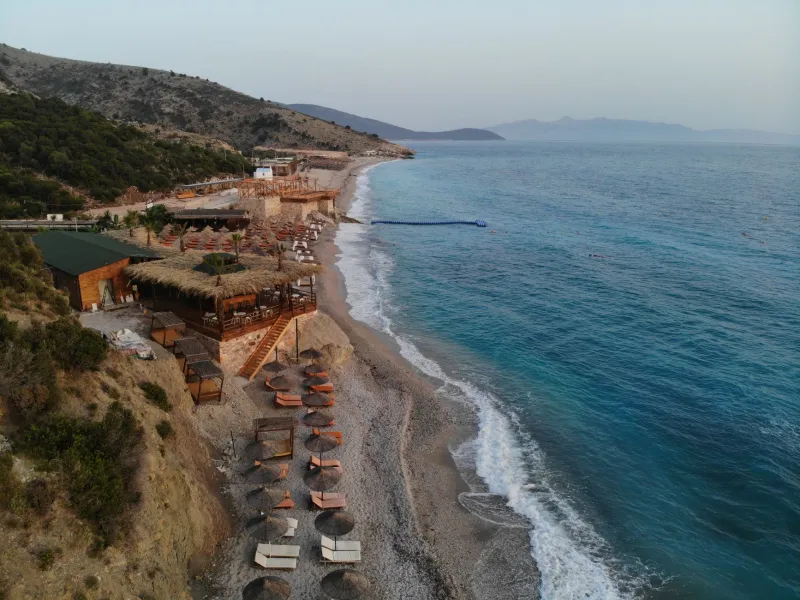
Let's be honest. The average American traveler has heard the pitch before: "eco-friendly resort" usually translates to a slightly dimmer light bulb and a laminated card asking you to reuse your towel. Albania's emerging eco-lodge scene is something genuinely different — and if you care about where your travel dollars land, you're going to want to pay attention.
The Albanian Riviera, that wild stretch of Ionian coastline running south from Vlorë toward the Greek border, has spent the last decade quietly attracting a very particular kind of visitor. Not the Instagram-chasing party crowd. Not the all-inclusive resort set. We're talking about travelers who want to actually feel a place — its soil, its food, its community — without leaving a crater-sized footprint behind.
A new wave of boutique eco-properties is making that possible in ways that would genuinely impress even the most skeptical sustainability advocate.
Why Albania, and Why Now?
Most Mediterranean coastlines have already been developed within an inch of their ecological lives. Croatia's coast is gorgeous but crowded. The Greek islands are fighting overtourism with one hand and wildfires with the other. Spain's Costa del Sol? Don't get us started.
Albania's Riviera, by contrast, is still largely intact. National park protections cover significant portions of the coast, and the Albanian government has — imperfectly but genuinely — resisted the kind of mass-development deals that turned other Adriatic and Ionian shores into concrete jungles. That protection has created a rare window of opportunity: a stretch of Mediterranean coastline where small, responsible operators can build something real before the bulldozers arrive.
And build they have.
The Lodges Worth Knowing About
Down near Himarë, a cluster of family-run eco-properties has started attracting American travelers who've done their homework. These aren't sprawling resorts with a sustainability brochure slapped on the front desk. They're small — often fewer than fifteen rooms — and deeply integrated into the landscape they sit within.
Solar panels power everything from the kitchen to the outdoor shower stations. Rainwater collection systems reduce dependency on municipal water. Composting programs divert kitchen waste into on-site gardens that supply the restaurant. One property near Palasë has gone as far as partnering with a local marine conservation NGO, offering guests the option to join beach cleanup dives as part of their stay.
The food situation alone is worth the flight. When a lodge sources its ingredients from within a five-kilometer radius — olive oil pressed from trees on the property, goat cheese from the family up the hill, fish pulled from the water that morning — the result isn't just ethically sound. It's the best meal you've had in years.
What "Luxury" Actually Means Here
Here's where Albania surprises people. "Eco" in the Albanian context doesn't mean roughing it. It means thoughtful.
You'll find stone-walled rooms with proper beds, locally made textiles, and views of the Ionian that would cost three times as much in Santorini. Some properties have infinity pools fed by natural spring water. Others have outdoor terraces built into cliff faces, where you can drink local raki as the sun drops into the sea. The luxury is in the intentionality — every element of these places has been considered, sourced, and built with a purpose beyond profit.
For American travelers used to the performative eco-theater of many US "green" hotels, this is refreshing in a way that's hard to articulate until you experience it.
The Conservation Angle
Beyond the individual properties, the broader ecological picture along the Riviera is worth understanding. The Llogara National Park, which sits above the coast and covers over 1,000 hectares of Aleppo pine forest, is a critical buffer zone for biodiversity. Several eco-lodge operators actively support reforestation and fire-prevention programs in the park — some through direct funding, others by employing local rangers as guides for hiking experiences available to guests.
The Ionian coast also sits on important sea turtle nesting grounds. Responsible lodges in the area enforce strict light-pollution policies during nesting season and partner with local environmental groups monitoring nest sites. If that sounds like a niche concern, consider that it's also one of the most unexpectedly moving things you can witness as a traveler: watching a loggerhead sea turtle navigate a moonlit Albanian beach in near total silence.
Practical Stuff for the Eco-Minded American Traveler
Getting to the Albanian Riviera from the US typically involves a connection through Rome, Vienna, or Istanbul into Tirana's Mother Teresa International Airport, followed by a scenic (read: winding and dramatic) drive south along the coast road. Rent a car if you can — the flexibility is worth it, and gas is cheap by American standards.
Most eco-lodges along the Riviera operate on a direct-booking model, which means your money goes straight to the property rather than being skimmed by a major booking platform. Many are small enough that a quick email or WhatsApp message is the best way to check availability and ask questions. Don't be shy about asking operators directly about their sustainability practices — the good ones will have detailed, genuine answers. The ones who can't explain their solar setup or where their food comes from are probably greenwashing.
Budget-wise, you're looking at roughly $80–$150 per night for a solid eco-lodge experience along the Riviera — a fraction of what comparable properties charge in Tuscany or the Cyclades. Meals, excursions, and local wine tend to run well under what you'd spend in Western Europe.
The Bigger Picture
Albania's eco-lodge movement isn't just a travel trend. It's a model for what responsible development on a pristine coastline can look like when small operators, local communities, and conservation-minded travelers align. Every booking at one of these properties is, in a modest but real way, a vote for that model over the resort-and-concrete alternative.
For American travelers who've grown tired of feeling complicit in the destruction of the places they love most, the Albanian Riviera offers something increasingly rare: a genuinely beautiful destination where showing up and spending money actually helps.