The Two-Week Albania Road Trip That Every American Traveler Is Sleeping On
Most Americans who've done the Balkans have hit Croatia's Dalmatian Coast, maybe Montenegro's Bay of Kotor, possibly a day in Dubrovnik before retreating from the crowds. Almost none of them have driven through southern Albania's mountain passes at golden hour, eaten grilled fish on an empty beach in the Albanian Riviera, or stood in a 2,500-year-old Greek amphitheater with exactly zero other tourists present. That last part is the whole point.
Albania is the road trip that the Balkan circuit forgot, and two weeks is enough time to see it properly. Here's how to do it.
Before You Go: The Practical Foundation
Getting there: Fly into Tirana's Mother Teresa International Airport (TIA). Several European carriers offer connections through Rome, Vienna, or Istanbul from major US hubs. Budget $600–$1,100 for round-trip airfare depending on your departure city and how far in advance you book.
Rental car: Essential. Albania's public transportation network is functional but limited outside major cities, and the best parts of this itinerary require a car. Rent from a reputable international agency at the airport. An automatic transmission compact will run you $30–$55/day. Note: Albanian roads range from smooth new highways to gloriously chaotic mountain tracks — a standard sedan handles the vast majority of this route just fine.
Budget: Albania is one of the most affordable destinations in Europe for Americans. Budget travelers can manage comfortably on $60–$80/day including accommodation, food, and activities. Mid-range comfort runs $100–$150/day. Credit cards are accepted in larger towns and cities; carry cash (Albanian lek) for villages, markets, and rural guesthouses.
Best time to go: Late May through early October. July and August are peak season on the coast — busier and pricier, but still nowhere near Mediterranean norms. Shoulder season (May–June and September–October) offers ideal weather, lower prices, and noticeably thinner crowds.
Days 1–2: Shkodër — Your Northern Base Camp
Skip Tirana for now (you'll pass through later) and head straight north to Shkodër, Albania's fourth-largest city and the gateway to the Albanian Alps. The city itself is underrated: Rozafa Castle, perched dramatically above the confluence of two rivers, offers sweeping views and genuine historical depth. The pedestrian boulevard, Bulevardi Skënderbeu, fills with locals every evening in a scene that feels completely removed from tourist performance.
Stay at a family-run guesthouse in the old town. Dinner at one of the riverside restaurants — fresh lake fish, local wine, bread that arrives hot from the oven — rarely costs more than $15 per person.
Don't miss: The Lake Shkodër shoreline at sunset. It's the largest lake in the Balkans and looks like something out of a landscape painting.
Days 3–5: Theth and the Albanian Alps
This is the section of the trip that people talk about for years afterward. From Shkodër, a mountain road (partially paved, entirely spectacular) winds up into the Accursed Mountains toward the village of Theth. The drive alone is worth it — but what awaits at the end is better.
Theth is a small community of stone houses and guesthouses spread across a river valley, ringed by peaks that would look at home in the Rockies. Hike to the Blue Eye spring, explore the historic Lock-In Tower (a stone refuge where feuding families once sheltered), and if your legs are up for it, attempt the full crossing to Valbona Valley over the Valbona Pass — one of the finest day hikes in the Balkans.
Accommodation: Guesthouse homestays, $30–$50/night including meals. Book ahead in summer.
Days 6–7: Driving South — Krujë and the Heartland
Head south toward Tirana, but stop in Krujë first. This hilltop town was the stronghold of Gjergj Kastrioti Skënderbeu, Albania's national hero, and the castle-museum complex here tells the story of Albanian resistance against the Ottoman Empire in genuinely compelling fashion. The old bazaar below the castle is one of the best places in the country to pick up handmade crafts, copper goods, and traditional textiles.
Spend one night in Tirana if you want — the capital has a solid food and bar scene centered around Blloku neighborhood — then push south.
Days 8–9: Berat — The City of a Thousand Windows
Berat is the kind of place that makes you feel slightly cheated by every other city you've ever visited. The UNESCO-protected old town climbs a steep hillside above the Osum River, its Ottoman-era houses stacked so densely that the effect from across the valley is almost hallucinatory — rows upon rows of identical arched windows reflecting the afternoon light.
Wander the Mangalem and Gorica quarters, visit the hilltop castle (still inhabited by a small community of residents), and spend an evening at one of the wine bars near the riverfront. The Berat region produces some of Albania's best wine, particularly from the indigenous Shesh i Zi grape variety.
Budget note: Berat is extremely affordable even by Albanian standards. A comfortable guesthouse room runs $35–$60/night.
Days 10–11: Gjirokastër and the Deep South
Another UNESCO town, another architectural jaw-drop. Gjirokastër's stone fortress-houses and Ottoman bazaar create a skyline unlike anything else in the region. Factor in a half-day trip to the ancient ruins of Butrint — a Greek, Roman, and Byzantine site set within a nature reserve near the Greek border — and you've got one of the richest two-day cultural stops on the entire itinerary.
Butrint tip: Go early. The site is rarely crowded, but morning light in the ruins is something special.
Days 12–14: The Albanian Riviera — Himara, Dhermi, and Sazan Island
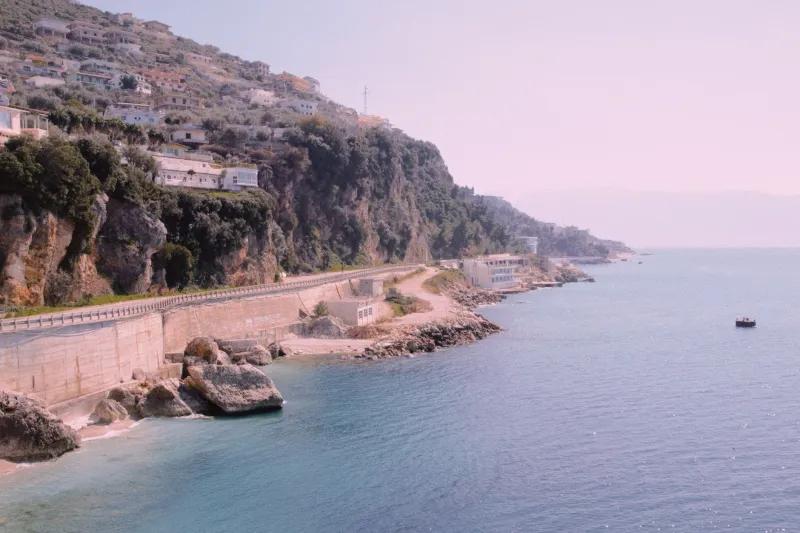
Save the coast for the end. The Albanian Riviera runs south from Vlorë toward the Greek border, and its beaches — backed by steep limestone cliffs and overlooked by olive groves — are legitimately among the most beautiful in the Mediterranean. Himara and Dhermi are the main towns, with a range of accommodation from budget guesthouses to small boutique hotels.
The water here is clear and warm from June through September. The beaches are less crowded than anything you'd find in Greece or Croatia at comparable quality. A boat trip to Sazan Island, a former military zone only recently opened to visitors, adds an unusual and memorable half-day excursion.
Closing thought: End the trip here, on a sun-warmed rock above the Ionian Sea, and try to remember why you ever thought the Amalfi Coast was the move. Albania got there first — it just didn't tell anyone.