Steam, Stone, and Silence: Albania's Ancient Hammams Are the Wellness Reset You Didn't Know You Needed
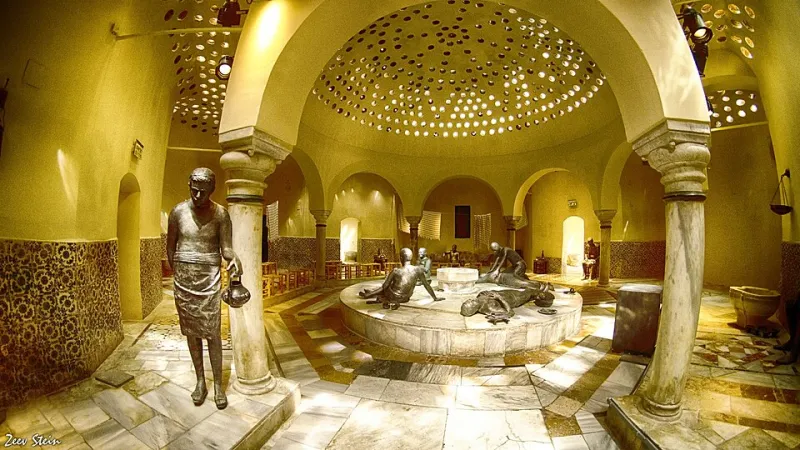
Photo: זאב שטיין, CC BY 2.5, via Wikimedia Commons
Let's be honest — the modern wellness industry has gotten a little exhausting. There's only so many times you can pay $300 for a "detox ritual" in a sleek spa that smells like eucalyptus and corporate ambition before you start wondering if there's a better way. Turns out, there is. And it's been sitting quietly on the Albanian Riviera and in the mountain valleys of the Balkans for the better part of 500 years.
Albania's Ottoman-era hammams and natural thermal baths are having a quiet moment — and by quiet, we mean genuinely, blissfully quiet. No Instagram influencers. No waitlists. No $18 cucumber water. Just centuries-old stone architecture, mineral-rich spring water, and bathing rituals that predate the entire concept of "self-care" by about half a millennium.
What Even Is a Hammam — and Why Should You Care?
If you've never heard the word hammam before, you're not alone. Think of it as a traditional Turkish-style bathhouse — a place where heat, steam, and ritual scrubbing have served as both physical and social therapy since the Ottoman Empire was at its peak. Albania, which spent roughly 450 years under Ottoman rule, absorbed this tradition deeply into its culture. The hammam wasn't just a place to get clean; it was a community hub, a place for conversation, celebration, and a kind of communal mindfulness that most modern spas are desperately trying to replicate with app-controlled mood lighting.
Many of Albania's original hammams are architectural gems in their own right. Domed ceilings punctuated by star-shaped skylights filter light into marble interiors. Thick stone walls regulate temperature naturally. The design is both functional and quietly stunning — the kind of thing that makes you wonder why we ever stopped building spaces like this.
The Hammam at Vlorë: A Living Relic
One of the most accessible and well-preserved examples is the Hammam of Vlorë, located in the coastal city that sits at the top of the Albanian Riviera. Built during the Ottoman period and recently restored, the bathhouse has been brought back to partial function — part historical monument, part working spa. The marble slabs are original. The dome overhead has been patched and reinforced, but the light still falls through it in that same golden, fractured way it did centuries ago.
Visitors who've made the trip describe it as genuinely moving — not in a manufactured, resort-package kind of way, but in the way that happens when a place carries real history in its walls. You're not performing relaxation here. You're just... relaxing. In a building that's been helping people do exactly that since before the United States existed.
The town of Vlorë itself is worth a few days of your time — it's a working coastal city with a real local energy, good seafood, and a harbor that looks particularly beautiful at dusk. But the hammam is its own reason to visit.
Thermal Springs in the Permet Valley: Nature's Version of the Spa Day
Head inland toward the Permet Valley in southern Albania and the wellness story shifts from architecture to geology. The Benja Thermal Pools, set along the Lengarica River canyon near the village of Permet, are one of those places that genuinely look too good to be real. Natural hot springs feed into a series of small pools carved into the river's edge, with temperatures warm enough to soak in even when the surrounding mountains are cold and dramatic.
The canyon walls rise steeply on both sides. There's a medieval Ottoman bridge nearby — because of course there is — and the whole scene has a kind of low-key surreal quality. You're sitting in a hot spring in a canyon in Albania, and it costs you essentially nothing. Compare that to the price of a weekend at a resort in Palm Springs and the math is pretty straightforward.
The Permet area has also become a quiet hub for travelers interested in combining thermal bathing with hiking, local food, and genuine cultural immersion. The town itself is known for its raki (Albania's beloved fruit brandy) and its roses, which bloom spectacularly in late spring.
The Ritual Matters as Much as the Water
One thing that separates the Albanian hammam experience from a generic spa day is the ritual component. Traditional hammam bathing follows a specific sequence — a period of passive heat to open the pores, followed by the kese, a vigorous exfoliation using a coarse mitt that removes dead skin with a thoroughness that borders on miraculous, and then a foam massage using handmade olive oil soap. The whole process takes about an hour and leaves your skin feeling genuinely different — not just moisturized, but renewed in a way that's hard to describe without sounding like a brochure.
Some of Albania's restored hammams offer this traditional treatment alongside more contemporary massage options. Others have stayed closer to their communal roots, where the focus is on the bathing itself rather than an elaborate menu of add-on services. Both are worth experiencing, depending on what you're after.
Practical Tips for American Wellness Travelers
If you're planning a wellness-focused trip to Albania, here's what to know before you go:
Timing matters. The thermal pools near Permet are enjoyable year-round, but they're especially magical in the shoulder seasons — spring and fall — when the canyon is green and the crowds (such as they are) are minimal. Summer brings more visitors, though "more visitors" in Albanian terms is still a fraction of what you'd find at any comparable European destination.
What to bring. For traditional hammams, a towel and flip-flops are essential. Many hammams provide the kese mitt and soap, but calling ahead to confirm is always a good move. Swimwear is typically required at mixed-gender facilities.
Budget expectations. This is Albania, which means prices that will make you do a double-take in the best possible way. A full traditional hammam treatment — the kind that would run $150 or more at a New York spa — typically costs between $10 and $25 in Albania. The thermal pools at Benja charge a nominal entry fee that's essentially symbolic.
Getting there. Vlorë is well-connected by bus from Tirana, about a two-and-a-half-hour ride that's comfortable and cheap. Permet requires more planning — it's best reached by car or through an organized tour from Gjirokastër, the stunning Ottoman city about an hour away.
Why This Matters Beyond the Massage Table
There's a bigger picture here worth acknowledging. Albania's hammams aren't just tourist attractions — they're living cultural artifacts that survived centuries of history, including decades of communist rule during which many religious and cultural institutions were suppressed or repurposed. The restoration of these spaces is part of a broader effort to reconnect with a heritage that was deliberately disrupted. When you visit a functioning hammam in Albania, you're participating in something that goes beyond wellness tourism. You're part of a story about cultural continuity and recovery.
That's not something you get from a hotel spa in Santorini.
Albania's hammams and thermal retreats offer something increasingly rare in modern travel — an authentic experience that hasn't been packaged, priced up, or Instagram-optimized into something unrecognizable. The steam is real. The stone is old. The quiet is genuine. And honestly? That's the whole point.