The Art That Survived Everything: Albania's Long Fight to Reclaim Its Stolen Cultural Soul
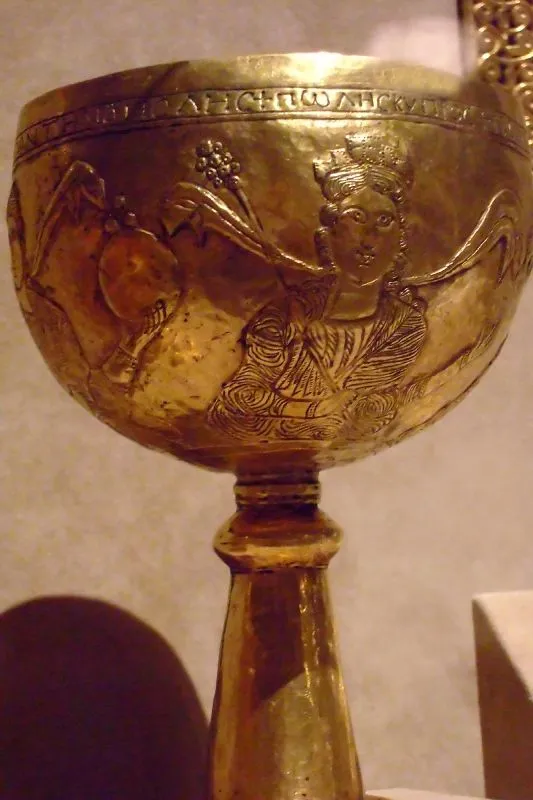
Photo: Mary Harrsch from Springfield, Oregon, USA, CC BY 2.0, via Wikimedia Commons
There's a particular kind of museum that only exists in countries that have been through the kind of history Albania has been through. The objects on display aren't just artifacts — they're survivors. Each one carries the weight of everything that didn't make it: the icons that were burned, the manuscripts that were pulped, the archaeological treasures that left the country in the trunks of officials and the hands of smugglers. Walking through Albania's best cultural institutions, you're not just looking at what's there. You're reckoning with what's missing.
That reckoning has become one of the most quietly compelling reasons to visit Albania as a culturally curious traveler. The story of what was lost, what was hidden, and what is slowly being recovered is unfolding in real time — and it's a story that's both deeply Albanian and universally human.
What Communism Did to Albanian Culture
To understand what's being recovered, you need to understand what was taken. Enver Hoxha's communist regime, which ruled Albania from 1944 until his death in 1985 (with the system limping on until 1992), was among the most extreme in the Eastern Bloc. In 1967, Hoxha declared Albania the world's first officially atheist state — and backed that declaration with action. Churches were converted into warehouses, sports halls, and granaries. Mosques were demolished or repurposed. Monasteries were stripped of their contents.
Religious art — Byzantine icons, illuminated manuscripts, Ottoman-era decorative objects — was particularly vulnerable. Some was destroyed outright as symbols of ideological contamination. Some was seized by the state and locked in storage facilities where neglect did the work that ideology didn't quite finish. And some disappeared into private hands, eventually finding its way onto the international antiquities market, turning up in auction houses in London, Vienna, and New York with provenance documents that ranged from creative to nonexistent.
Beyond religious art, the communist period suppressed or distorted Albanian cultural identity in subtler ways. History was rewritten to serve the regime's narrative. Folk traditions were permitted only in officially sanctioned forms. The complex, layered cultural heritage of a country that had been shaped by Illyrian, Byzantine, Ottoman, and Western influences was flattened into an approved version of national identity.
The National Historical Museum: Where the Story Starts
For most visitors, the journey into Albanian cultural recovery begins at the National Historical Museum in Tirana — the largest museum in the country and a building impossible to miss, thanks to the enormous socialist realist mosaic that covers its facade like a fever dream of muscular workers and raised fists. The mosaic is itself a fascinating artifact of the communist period, and the museum has made the smart decision to treat it as such rather than remove it.
Inside, the collection tells Albania's story from prehistoric times through the post-communist transition. The archaeology galleries are genuinely impressive — the Illyrian material alone would justify a visit, with intricate metalwork, ceramics, and funerary objects that demonstrate the sophistication of pre-Roman Balkan cultures that rarely get the attention they deserve in Western historical narratives.
But it's in the sections dealing with the medieval and Ottoman periods that the gaps become visible. Curators have done careful work to contextualize what's displayed and what's absent, providing a kind of honest accounting that's more affecting than a complete collection would be. The labels don't hide the losses. They name them.
The Icon Hunters: Reclaiming Sacred Art
Some of the most dramatic work in Albanian cultural recovery involves icons — the painted religious images that were central to the Orthodox Christian tradition maintained in southern Albania for centuries. Albanian Orthodox iconography has a distinctive character, with a particularly important school of icon painting associated with the 18th-century master Onufri and his successors. Works from this tradition are among the most sought-after on the international market.
The Onufri Museum in Berat — housed in the Cathedral of the Dormition of Saint Mary within the city's spectacular hilltop citadel — holds one of the finest collections of Albanian religious art that survived the communist period. The icons here were largely preserved because Berat's museum status gave the citadel a degree of protection that more vulnerable religious sites didn't have. Walking through the collection, the quality of the work is striking — the gold backgrounds glow, the figures have an emotional directness that transcends their stylized forms, and the history of preservation hangs in the air alongside the smell of old wood and incense.
Beyond Berat, Albanian authorities and cultural organizations have been working for years to track down and repatriate icons and artifacts that left the country illegally. It's painstaking work, dependent on international cooperation, legal frameworks that vary by country, and the willingness of institutions and private collectors to engage honestly with questions of provenance. Progress is real but slow.
The Restorers: Rebuilding What Time and Politics Damaged
In a workshop in Gjirokastër — the UNESCO-listed Ottoman city in southern Albania that feels like a set designer's vision of what a historic Balkan town should look like — a small team of conservators is working on a collection of painted wooden ceilings removed from houses that were damaged or abandoned during the communist period. The ceilings are extraordinary: geometric patterns in faded reds and blues, floral motifs, occasional figural elements, all painted by craftsmen whose names were never recorded.
The restoration process is slow and requires constant decisions about how much to restore and how much to leave as found. The conservators here are thoughtful about this — they're not trying to make things look new. They're trying to stabilize what exists and make the history legible, including the history of damage and loss.
Gjirokastër itself functions as a kind of open-air museum of Albanian architectural heritage, with its stone tower houses, bazaar district, and imposing castle drawing visitors who understand that the city's historic fabric is itself a form of cultural artifact worth protecting. The Albanian government's investment in the city's conservation, supported by international heritage organizations, has been significant — and the results are visible in the quality of the restoration work throughout the old town.
Visiting With Purpose: What American Travelers Should Know
For Americans interested in engaging seriously with Albania's cultural recovery story, a few practical notes:
Build time for context. These aren't collections you want to rush through. The National Historical Museum in Tirana benefits from a guided visit — local guides can provide the historical background that makes the gaps and presences in the collection meaningful rather than arbitrary. Budget at least three hours.
The Berat combination. Pairing the Onufri Museum with a walk through Berat's Mangalem and Gorica neighborhoods, where traditional Ottoman-era houses have been carefully maintained, gives you a layered sense of the cultural heritage at stake. Berat is also just one of the most beautiful small cities in the Balkans, which doesn't hurt.
Gjirokastër for depth. The Gjirokastër National Museum (housed in the city's castle) covers the communist period with a directness that's rare and valuable. The exhibits on the Hoxha regime and its cultural policies are sobering and illuminating in equal measure.
Engage with local experts. Albania has a growing community of archaeologists, art historians, and cultural preservation professionals who are often willing to talk with serious visitors. University contacts, local heritage organizations, and museum staff can connect you with people doing remarkable work that rarely gets international attention.
Why This Story Matters Beyond Albania
Albania's cultural recovery isn't just a national story. It's a case study in what happens to cultural identity under extreme political pressure — and what it takes to rebuild that identity when the pressure lifts. The questions it raises about ownership, authenticity, institutional responsibility, and the relationship between a people and their artistic heritage are questions that resonate well beyond the Balkans.
For American travelers who've spent time thinking about similar questions in the context of Indigenous cultural repatriation, or the debates around colonial-era museum collections, Albania offers a different but genuinely illuminating angle. The scale is different. The politics are different. But the underlying questions — who does this belong to, what does it mean, and what are we willing to do to get it back — are remarkably similar.
The art that survived everything in Albania survived because people hid it, protected it, risked things for it. Learning about that survival, in the rooms where the surviving objects now live, is one of the more quietly profound experiences that travel can offer.