Quit, Pause, Breathe: The Americans Spending Six Months in Albania to Find Their Next Chapter
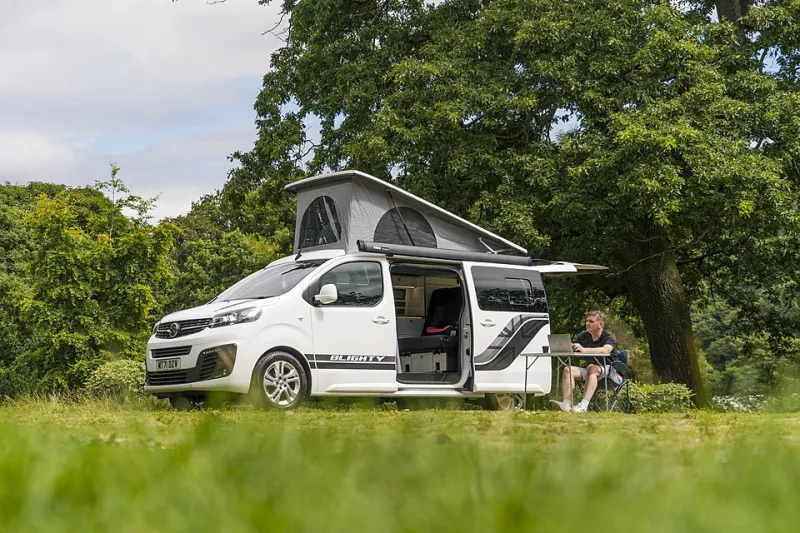
Photo: CruiseAmerica, CC BY-SA 4.0, via Wikimedia Commons
Somewhere between the third Zoom meeting of the morning and the fourth unanswered email about Q3 deliverables, Melissa Torres made a decision. She closed her laptop, walked to her kitchen in Austin, Texas, made a cup of coffee, and started Googling flights to Tirana.
Six weeks later, she was sitting on a balcony in Berat — one of Albania's UNESCO-listed Ottoman cities — watching the sun go down over a hillside of white stone houses, paying $420 a month in rent, and feeling, for the first time in years, like she could actually breathe.
"I didn't quit my job dramatically," she laughs. "I negotiated a six-month leave of absence. My company was shocked, but they said yes. And honestly? I think they respected it more than if I'd just burned out and quit."
Melissa is part of a quiet but growing movement of American professionals — marketers, engineers, therapists, writers, consultants — who are choosing Albania as the backdrop for their personal reset. Not a two-week vacation. Not a gap year in their twenties. A real, deliberate pause. And the reasons they're landing in Tirana rather than Barcelona or Bali are surprisingly practical.
The Math Makes Sense
Let's start with money, because that's usually the conversation stopper when Americans talk about extended travel. Albania, quite simply, is one of the most affordable countries in Europe for English speakers — and the gap between what you'd spend there versus what you'd spend at home is genuinely hard to overstate.
A furnished one-bedroom apartment in Tirana's trendy Blloku neighborhood runs anywhere from $350 to $600 a month. Dinner at a sit-down restaurant with wine? Rarely more than $15 a person. A monthly grocery bill for one person living comfortably? Around $150. For Americans paying $2,000-plus in rent in cities like Denver or Nashville, the financial math of a six-month Albanian sabbatical can actually come out ahead of staying home.
James Whitfield, a UX designer from Portland who spent four months in Shkodër last year, did the calculation before he left. "I was spending $3,200 a month just to exist in Portland," he says. "In Shkodër, I was spending maybe $1,100, total — rent, food, transport, everything. I actually came home with more money than when I left."
The Infrastructure Is Better Than You Think
One of the most common misconceptions Americans have about Albania is that it's still stuck somewhere in the post-communist 1990s. The reality in 2024 is almost the opposite. Tirana has fiber internet that rivals anything you'd find in a major US city. Co-working spaces have popped up across the capital and in coastal cities like Vlorë and Sarandë. Mobile data is fast, cheap, and widely available even in smaller towns.
For anyone working remotely — whether on a company arrangement or freelancing — Albania's digital infrastructure is genuinely not the obstacle people assume it will be. Several American remote workers we spoke to mentioned that their internet connection in Tirana was actually more reliable than what they had back home.
Albania also sits in the Central European Time zone, which means overlapping hours with US East Coast business hours are workable, especially for morning-heavy schedules. It's not perfect, but it's far from the logistical nightmare some people expect.
The Expat Community Nobody Talks About
One thing that surprises almost everyone who arrives in Albania for an extended stay is how quickly they find their people. Tirana in particular has a small but active international community — a mix of digital nomads, NGO workers, language teachers, and fellow sabbatical-takers from the US, UK, Germany, and beyond.
Facebook groups, Meetup events, and word of mouth connect newcomers faster than you'd expect in a country that's still largely off the mainstream expat radar. That relative obscurity, paradoxically, makes the community tighter. "Everyone who ends up here chose to be here," says Rachel Okonkwo, a former marketing director from Chicago who spent five months in Tirana. "There's no one who stumbled in by accident. That makes the connections feel more intentional."
Albanians themselves are famously hospitable — the concept of besa, a traditional code of honor that includes the sacred duty of welcoming guests, is deeply embedded in the culture. As a foreigner, you're unlikely to feel invisible or unwelcome. More likely, you'll find yourself invited to a neighbor's home for raki before you've fully unpacked.
Practical Things Nobody Tells You Before You Go
If you're seriously considering an Albanian sabbatical, here's what the people who've done it wish they'd known earlier.
Visas are straightforward. US citizens can enter Albania without a visa and stay for up to one year. You read that right — one full year, no paperwork required beyond your passport. This is one of the most generous entry policies in Europe for American travelers, and it makes extended stays logistically simple in a way that other popular sabbatical destinations simply aren't.
Learn a few words of Albanian. English is widely spoken among younger Albanians, especially in Tirana, but making even a small effort with the local language goes an enormous way. Apps like Duolingo have Albanian courses, and locals will genuinely light up if you greet them in their language.
Embrace the slow pace. Albania operates on a different rhythm than the US. Things take longer. Bureaucracy is occasionally maddening. Buses run on approximate schedules. If you can let go of American efficiency expectations, this becomes a feature rather than a bug — it's part of what makes the reset actually work.
Get out of Tirana. The capital is wonderful, but the whole country is the point. Rent a car for a week and drive up to the Accursed Mountains. Take a furgon (shared minivan) to Gjirokastër. Spend a long weekend on the Albanian Riviera. The country is small enough that almost everything is within reach of a day's travel.
What Comes After
Almost everyone we spoke to said the same thing: they came back to the US changed in ways they hadn't anticipated. Not because Albania handed them a life plan, but because the distance — geographic and psychological — gave them space to actually think.
Melissa returned to Austin after six months and negotiated a new role at her company with better boundaries and a 20% raise. James came back to Portland and launched the freelance practice he'd been putting off for three years. Rachel is still in Tirana.
"I extended my stay," she says simply. "I'll figure out the rest when I'm ready."
That's the thing about Albania. It doesn't ask you to have it all figured out. It just asks you to show up — which, for a lot of burned-out Americans right now, turns out to be exactly enough.