Tirana Is Open for Business: The Honest Guide for American Entrepreneurs Thinking About Making the Move
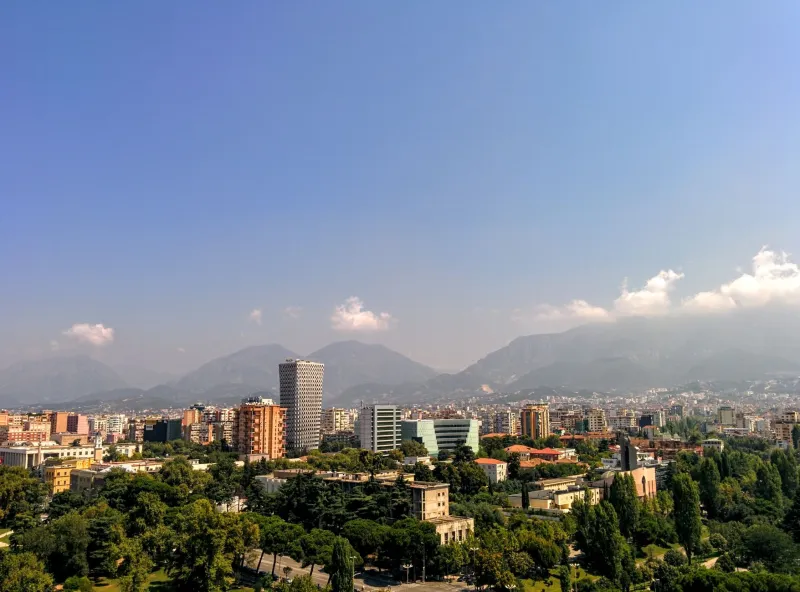
Somewhere between the third espresso and the second conversation with a local developer who charges a third of what you'd pay in Austin, something clicks for a lot of Americans who visit Tirana. The question stops being why would I start a business here and starts being why wouldn't I?
Albania has been on the periphery of the European startup conversation for a few years now, but the word is spreading faster in 2024. American founders, freelancers, and small business operators are showing up in Tirana not just for the low cost of living (though that's real), but because the business environment is genuinely more accessible than most people expect — and the quality of life is high enough to make the leap feel less like a sacrifice and more like an upgrade.
This guide covers what you actually need to know before you commit: the visa situation, the cost math, the culture of doing business, and stories from Americans who've already made the move.
The Visa Situation (It's Simpler Than You Think)
Let's start with the part that tends to scare people off before they've done the research. Albania doesn't require US citizens to obtain a visa for stays of up to one year — that's right, one full year, not the ninety-day Schengen limit that drives digital nomads crazy across Western Europe. You enter on your US passport, and as long as you're not staying beyond twelve months without formalizing your residency, you're operating in a completely legal gray zone that Albania has effectively made into a gray-zone-free zone.
For those looking to establish longer-term residency or set up a legal entity, Albania's process is comparatively streamlined. A business registration through the National Registration Center (QKB) can be completed in a matter of days — sometimes faster. The costs involved are minimal compared to incorporating in a US state, let alone navigating the bureaucratic complexity of Germany or France.
Albania is also an EU candidate country, which means its regulatory environment is gradually harmonizing with European standards. For American entrepreneurs, that's a meaningful detail: the legal infrastructure you're working within is moving toward a framework you'll recognize.
The Cost Math That Changes the Calculation
Here's where the spreadsheet starts looking interesting. Tirana's cost of living is roughly 60–70% lower than a mid-tier US city like Denver or Nashville — and the gap widens significantly when compared to coastal metros like San Francisco, New York, or Miami.
A comfortable one-bedroom apartment in a central Tirana neighborhood runs $400–$700 per month. A coworking desk at one of the city's growing number of shared workspaces costs $100–$200 monthly. A sit-down lunch with a glass of wine? Under $10. These aren't backpacker numbers — this is genuinely comfortable urban living at a fraction of the American price.
For businesses that depend on local talent, the numbers get even more compelling. Albania produces a solid pipeline of university-educated software developers, designers, and marketing professionals, and local salary expectations are a fraction of what you'd pay in comparable US markets. Several American tech founders operating in Tirana report building effective small engineering teams for what they'd spend on a single mid-level developer back home.
What Business Culture Actually Looks Like
This is the part that guidebooks tend to gloss over, so let's be direct about it. Albanian business culture has its own rhythms, and adjusting to them matters.
Relationships come first. Cold outreach works, but warm introductions work much better. Albanians tend to do business with people they know and trust — which means investing time in face-to-face networking before expecting contracts to materialize. The coffee meeting is a genuine institution here, not a formality. Budget time for it.
Communication can be informal by US standards, especially in the startup and creative sectors. WhatsApp is a legitimate business communication channel. Meetings can run late or shift on short notice. If you're the type who needs rigid scheduling and formal communication chains, you'll need to build that structure yourself rather than expecting it from your Albanian counterparts.
On the positive side, Albanians tend to be genuinely hospitable toward foreign entrepreneurs. The local business community in Tirana has a collaborative energy that's hard to manufacture — people share contacts, make introductions, and root for each other in ways that can feel almost disarming to Americans used to more competitive startup environments.
Where Americans Are Actually Building Things
The sectors attracting the most American entrepreneurial energy in Albania right now include software development and IT services, tourism and hospitality, food and beverage, and remote-team staffing agencies. A handful of Americans have also launched English-language schools, content production companies, and import/export operations leveraging Albania's strategic Adriatic position.
Take the story of a former Chicago-based marketing consultant who relocated to Tirana in 2021. Within eighteen months, she'd registered a local agency, hired four Albanian employees, and was serving a mix of European and US clients — all while operating at a cost structure that made her competitive in ways she couldn't have been from the US. "The time zone overlap with European clients is actually better than I expected," she told us. "And the quality of work from my team here is genuinely excellent."
A Brooklyn-based software developer who moved to Tirana two years ago put it more bluntly: "I was paying $3,200 a month for a one-bedroom in Bushwick. Here I have a two-bedroom apartment with a terrace, I'm paying $550, and I've got money to actually invest in what I'm building."
Networking and Finding Your People
Tirana's expat and entrepreneurial community is small but active. The Tirana Entrepreneurs network hosts regular meetups, and coworking spaces like Tumo Tirana and several others in the Blloku neighborhood serve as informal hubs for connecting with both locals and fellow foreigners. Albania's participation in regional startup events and EU innovation programs means the ecosystem punches above its weight in terms of external connections.
For Americans specifically, the US Embassy in Tirana runs occasional business-focused events, and the American Chamber of Commerce in Albania (AmCham Albania) is an underutilized resource that can open doors quickly.
Before You Book the One-Way Ticket
A few honest caveats. Albania's banking infrastructure, while improving, still lags behind Western European standards. Opening a local bank account as a foreigner requires patience and documentation. Internet infrastructure in Tirana is generally solid, but can be inconsistent in smaller cities and rural areas. And while English is widely spoken in the capital, especially among younger professionals, you'll get further faster if you make the effort to learn some basic Albanian.
None of these are deal-breakers. They're friction points that every entrepreneur who's made the move has navigated successfully. The key is going in with realistic expectations and a genuine curiosity about the place — not just a spreadsheet.
Albania rewards the entrepreneur who's willing to engage with it on its own terms. And for those who do, the upside is real.